
Transcriptome-based miRNA and mRNA interaction analysis revealing the salt tolerance mechanism of Haidao 86

首發時間:2025-11-27
Xin Yang(1998),Female,Cell Biology
Jiayu Zhang 1 2 3 4 Yongjie Shan 2Yongjie Shan(1975),Male,professor,Land Use and Planning
Minjing Kong 1 2 3 4Minjing Kong(1999),Female,Cell Biology
Yajing Sun 1 2 3 4Yajing Sun(2002),Female,Cell Biology
Xiaoqian Fan 1 2 3 4Xiaoqian Fan(2001),Female,Cell Biology
Qijun Zhang 3 5Qijun Zhang(1973),Male,PhD,Rice Genetics and Molecular Breeding
Guiqiang Yang 6 Chuangen Lv 3 5Chuangen Lv(1964),Male,PhD,Grain Crop Research
Meiping Zhang 1 2 3 4Meiping Zhang(1975),Female,Professor,Cell Biology
Abstract:Rice (Oryza sativa) is one of the most staple food cereal for almost half of people around in the world. Salt stress is possibly the main factor that seriously limiting rice growth and grain yield in the worldwide. High salt concentration may lead to plant suffer the nutrient stresses, osmotic stress and ionic poison. At the same time, most plants had improved a series of machines to adapt to the unfavorable environment, including reactive oxygen species scavenging system. The regulation of the expression of salt tolerance related genes and miRNA may participate in the resistent regulation by acting on the specific target genes. The cell surface-localized receptor-like protein kinases is the largest group of membrane receptors in plant, which conserved signaling components that participate in diverse life processes including growth, development and resistance of biotic and abiotic stress. In this study, by using a strong salt-tolerant rice resource, Haidao 86 , we research the transcriptome and small RNA sequencing results, and elucidate the relationship between miRNA and their corresponding mRNA targets, and explore the potential miRNA which may regulate the RLKs of rice to resistent the environment stress. This work maybe provide some theoretical basis for studying the improvment of rice salt tolerance in future.
keywords: Haidao 86, Salt stress, miRNA, RLK
點擊查看論文中文信息
基于轉錄組的miRNA與mRNA互作分析揭示海稻86耐鹽機制
Xin Yang(1998),Female,Cell Biology
張佳裕 1 陜永杰 2Yongjie Shan(1975),Male,professor,Land Use and Planning
孔敏靜 1Minjing Kong(1999),Female,Cell Biology
孫雅婧 1Yajing Sun(2002),Female,Cell Biology
范曉倩 1Xiaoqian Fan(2001),Female,Cell Biology
張啟軍 3Qijun Zhang(1973),Male,PhD,Rice Genetics and Molecular Breeding
楊桂強 4 呂川根 3Chuangen Lv(1964),Male,PhD,Grain Crop Research
張美萍 1Meiping Zhang(1975),Female,Professor,Cell Biology
摘要:水稻(Oryza sativa L.)是全球近半數人口最重要的主糧作物之一。鹽脅迫是目前嚴重制約全球水稻生長發育及谷物產量的主要環境因素。高鹽濃度可能導致植株遭受營養脅迫、滲透脅迫及離子毒害。與此同時,絕大多數植物已進化形成一系列適應機制以應對不良環境,包括活性氧清除系統。耐鹽相關基因及miRNA的表達調控可通過作用于特定靶基因參與抗逆調節過程。細胞表面定位的受體樣蛋白激酶作為植物中最大的膜受體家族,是參與生長發育及生物/非生物脅迫抗性等多種生命過程的保守信號組分。本研究以強耐鹽水稻種質"海稻86"為材料,基于轉錄組與小RNA測序數據,解析miRNA與其對應mRNA靶標間的調控關系,挖掘可能通過調控RLKs介導水稻環境脅迫適應的關鍵miRNA。本工作可為后續水稻耐鹽性改良研究提供理論依據。
基金:
論文圖表:
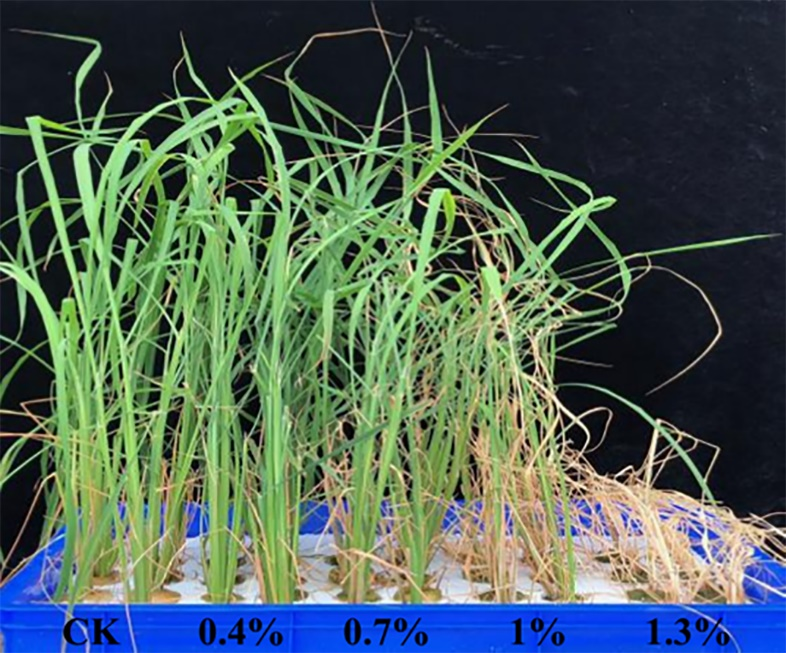


引用


No.****
動態公開評議
共計0人參與
勘誤表
基于轉錄組的miRNA與mRNA互作分析揭示海稻86耐鹽機制
中國科技論文在線 版權所有
網站地圖|
在線首頁|
在線簡介|
服務條款|
聯系我們

京公網安備 11040202430024號 京ICP備15006316號-2| 網絡出版服務許可證 (總)網出證(京)字第083號 | 文保網安備案號:1101080066
 提示
提示


 .txt
.txt .ris
.ris .doc
.doc
評論
全部評論